

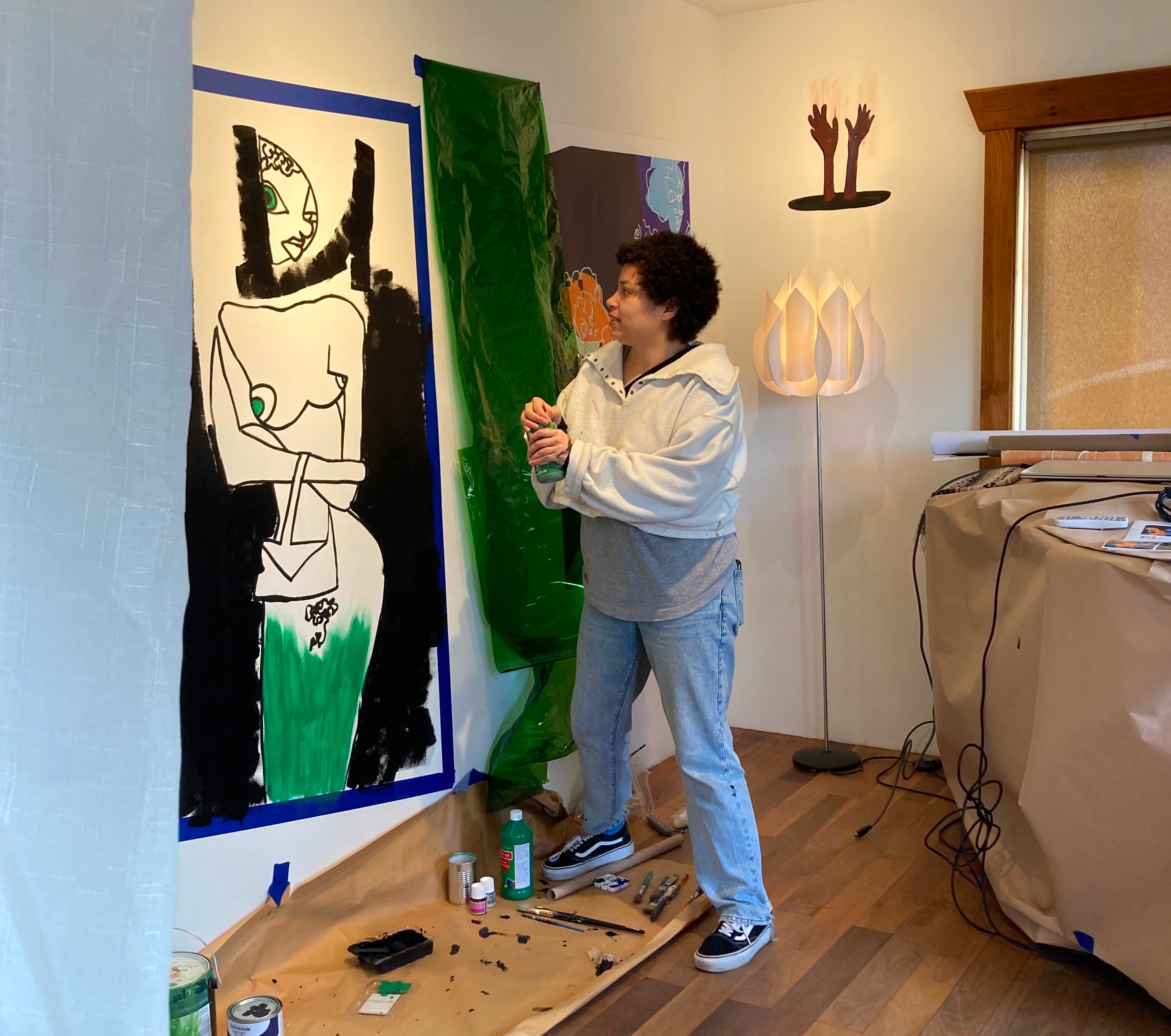
Born into a world that systematically withholds the most basic foundational requirements for creative risk—time, forgiveness, financial stability—many artists learn early to conceal or obscure powerful feelings in their work. Their fears. Their joy. Their rage. Their vulnerability. Not because these impulses lack value, but because expressing them would strip artists bare in a culture where clarity is punished and obfuscation is safety. So instead, much of what passes for the contemporary art scene is constrained, banal, repetitive, and defensively safe. Artists are creating scared—afraid of punishment, of banishment, of obscurity and financial ruin. The truth is that some of our most risk-taking and courageous creatives have been silenced—not by individuals, but by entrenched structures of violence.
Homeless artists don’t go to Cornish, not even when their fees are waived. The question of Where will I lay my head tonight? supersedes all else. High rent, unreliable family support, and unstable romantic partners can make creative risk and opportunity seem as abstract and impossible as a fantastical dream.
Before she was a full-time multidisciplinary creative and contemporary art agent, Ramona Lee was a working-class youth navigating housing insecurity in a rapidly gentrifying Seattle. It was 2011. Lee was 18 years old and had just arrived from Montana. The Seattle Art Museum was hosting Picasso: Masterpieces from the Musée National Picasso and Catherine Mayer’s The Red Popsicle was installed in Belltown.
“My dad told me that if I was to live with him and his girlfriend that I had to go to school,” Lee said during an interview with Artists Up Close. “So, what I did was, I went to Cornish College of the Arts. And I brought my paintings in my trunk.”
Lee had been making art since childhood—entering competitions, producing drawings that consistently impressed judges, and completing the International Baccalaureate program. By the time she arrived at Cornish with her portfolio, she had the technical foundation to be taken seriously.
“They were very impressed with my work,” Lee said. “They critiqued it, asked me questions about my background, and talked about where they could see me fitting in. They told me they would waive a whole bunch of fees.”
By that point, however, housing instability was already shaping Lee’s decisions. She was living with an ex-boyfriend and working forty hours a week at a local diner to cover rent. Survival—not schooling—dictated the immediate terms of her life.
“I just forgot all about Cornish,” Lee said.
Structures. Cold, often unyielding structures shape the conditions under which artists live and work. Some move through these systems with ease—not because they are more talented or disciplined, but because the structures were built to support people like them. Others encounter only friction, constraint, and punishment within systems designed long before they were born.
Artists such as Bill Traylor, born into slavery in 1853, lived the consequences of racial and caste-based structures that reduced Black life to extractable labor while foreclosing access to education, property, and cultural legitimacy. Decades after his death in 1949, Traylor is now widely recognized as one of the most important American artists many people have never heard of—a recognition made possible only after the artist no longer required care, resources, or protection.
And while the scale and brutality of these structures have shifted over time, their underlying logic—who is supported, who is extracted, and who is left without margin for error—remains intact.
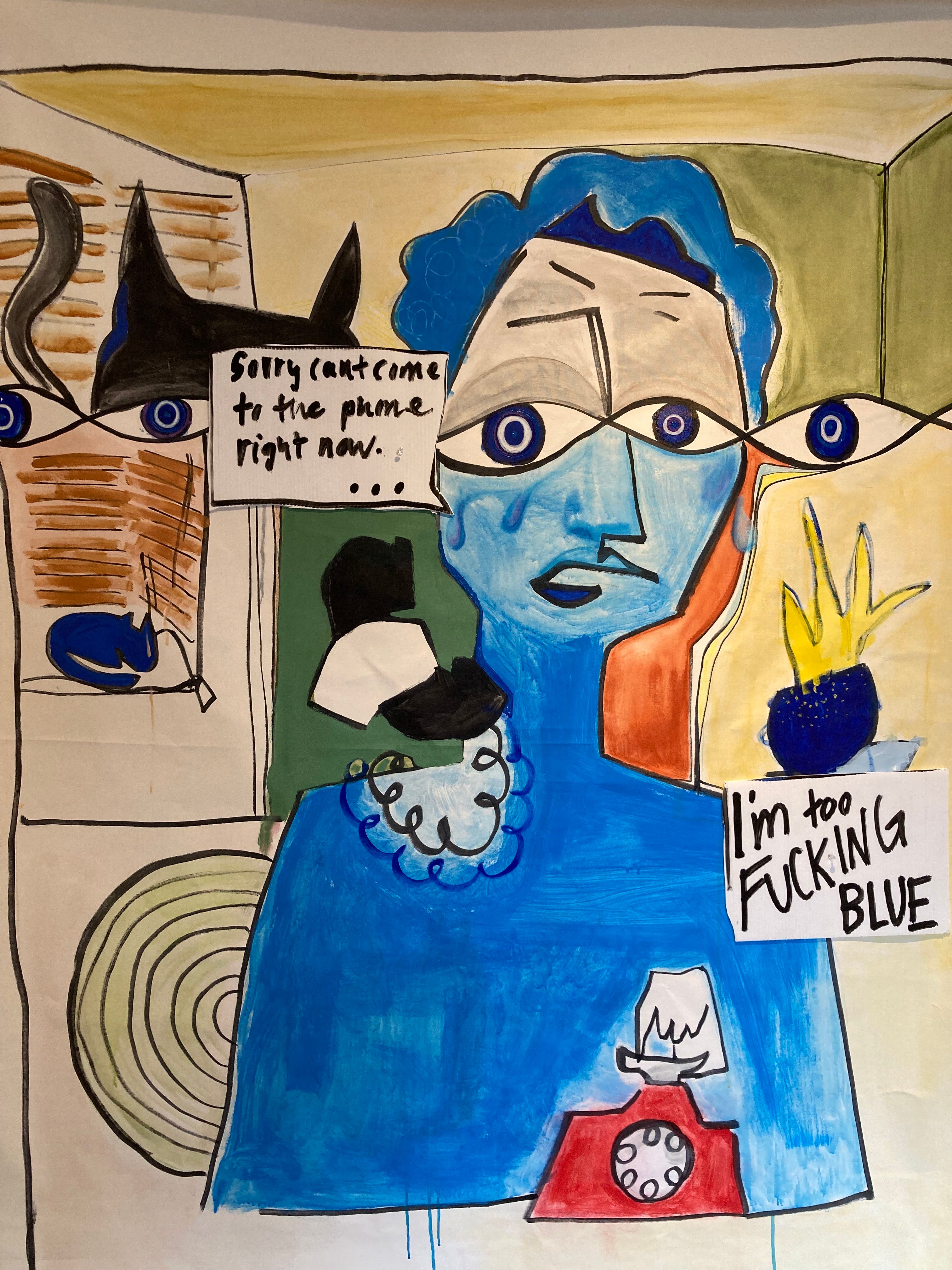
In my reading of the work, Ramona Lee’s art carries an urgency and symbolic compression that often emerge under conditions of constraint. As with artists such as Bill Traylor, this immediacy is not simply an aesthetic preference but appears to be a formal response to structures that deny time, insulation, and room for error. There is also an autobiographical dimension to Lee’s paintings—an engagement with ordinary, everyday life that functions as a form of interior documentation. This kind of work is rare, yet critical, for artists navigating systems that quietly eliminate many others on a similar path.
“I felt like our poverty affected us more than anything,” Lee said of her childhood growing up in a trailer park in Montana. “It affected how my friends’ parents treated me, but I didn’t understand that till later.” She recalled being uninvited to parties because some people saw her as a moocher. “I was always eating their beef jerky out of their fridge,” she added, noting that even one of the parents recognized it was because she didn’t have enough food at home. Before moving to Seattle, Lee spent her last two years of High School in Montana living on her own in a hotel room.
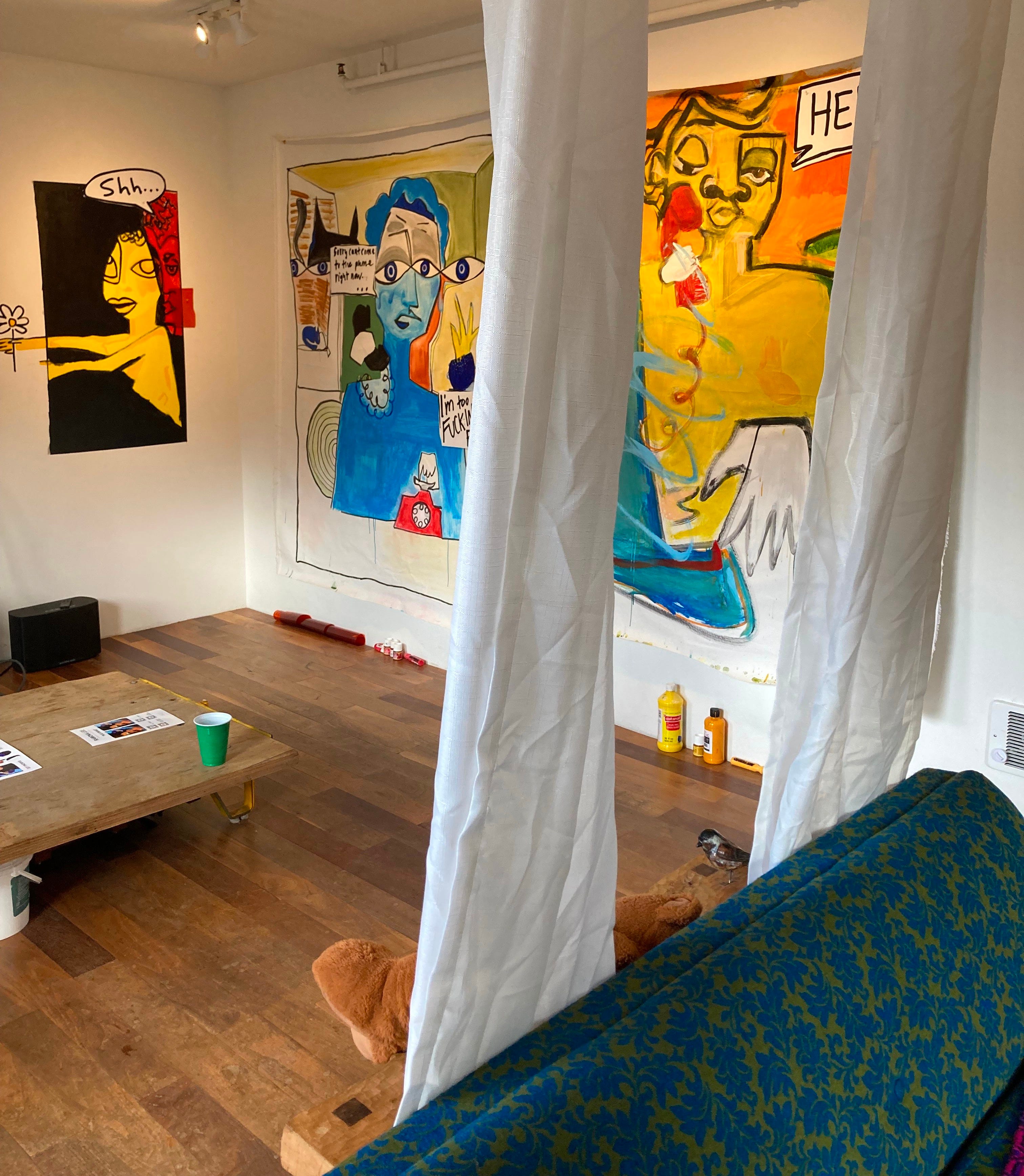
In the art world, structural exclusion is not an anomaly—it is a recurring condition. Bill Traylor, born enslaved, lived unhoused for a period and died in poverty in 1949. Only after his death—when he no longer required housing, income, or institutional care—was his work absorbed, circulated, and canonized.
What would an art world look like if it were designed to sustain structurally excluded artists while they are still alive, vulnerable, and actively producing work?
An art world that supports structurally excluded artists would have to be built on materially different assumptions than the ones we have now. At a minimum, it would require compensation standards that guarantee a living wage—including for internships—so that participation is not restricted to those subsidized by family and inherited wealth. It would treat art education as a foundational public good rather than an elective luxury, ensuring that creative development begins early and broadly, not selectively. And it would require stable housing protected by legal structures that recognize tenants as human beings rather than disposable revenue inputs in a speculative market. Without these conditions, the exclusion of working-class and precarious artists is not a failure of outreach or intention—it is the predictable outcome of a system designed to externalize risk onto those least able to absorb it.
© Copyright 2026 - Artists Up Close/Beverly Aarons. All rights reserved.